Lecture outline - Introduction to physical
geology.
 Physical geology = study of the
processes that shape the surface and interior of the earth.
Physical geology as a discipline
is evolving into earth system science. What does that
mean?
The basic goal of this course is
then to gain some initial understanding of how the earth operates (more on that).
Why
would one want to learn about the earth?
Course mechanics:
- Syllabus
.
- Lab T.A. Denay Grund
- Field Trip(s) - TBA.
- Take lots of notes, ask questions, read ahead.
Philosophy of science
Since physical geology is a scientific
endeavor it makes sense to explore the basic nature of that endeavor.
- What
is involved in the scientific process?
- What
is the induction method?
- What is unworkable about the induction method narrowly defined?
- Thomas Chamberlin argued for multiple working
hypotheses as good scientific practice (first published in 1890).
Related to objectivity as a goal.
- Sir Karl Popper and falsification (1930s) - a first important step in the advance of science is disproving something (i.e. falsifying a premise).
- Thomas Kuhn and paradigms (1970s): A simple initial definition of paradigm is as follows - a paradigm is a guiding theory or set of ideas for a scientific discipline (consists of exemplars).
A revised definition is that a paradigm is what is shared by
a scientific community. What
is shared that then defines a paradigm?
- A flow diagram for
evolution of thought.
- Is science a 'modern invention' of the last
few centuries or is it ancient practice, something perhaps built into humanity (something there are genes for)?
Some highlights in the history
of geologic thought
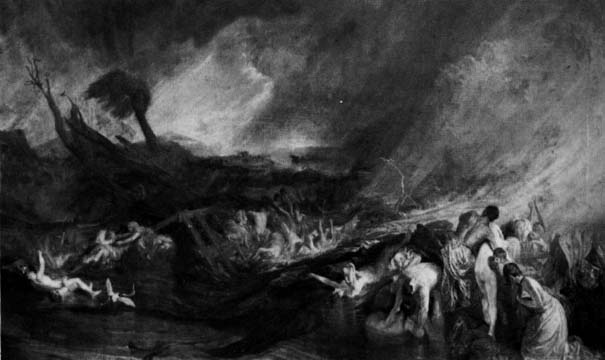 Natural theology and associated cosmogenies, were also early hypotheses as to how the earth worked and what its history was.
A basic driving theologic question of the time -what does the creator's creation say about the creator? Hutton, discussed below, was very interested in natural theology. A cosmogeny was a more detailed creation and natural history account that built on the boblical account.
To the right Turner's (a British artist) 1813 depiction of the biblical deluge. At this time the biblical deluge and the associated genesis account was still being used as a workable scientific hypothesis by many naturalists, who looked for evidence for the deluge in the geologic record. The lack of success in finding evidence for a global deluge coupled with abundant evidence for a long and complicated earth history led to the refutation of the genesis account and the biblical deluge in the scientific community.
Thomas Burnet, 1691,
Sacred Theory of the Earth
- one of the better known early cosmogenies.
- forces involved not extant these days.
- earth's history of short duration.
- therefore global catastrophic events (especially floods) needed to do all the work.
- where did the water for the great flood come from? An interesting
and valid scientific question at the time, which this cosmogeny addressed.
- Site with portion of his work.
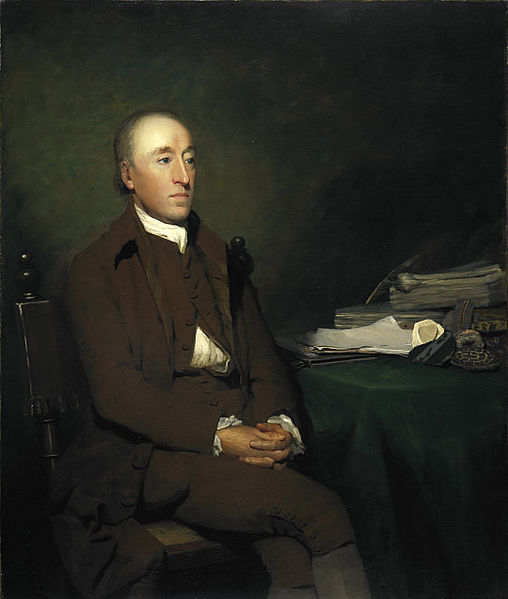 James Hutton,
formulated the principle of uniformitarianism and the concept of the rock cycle in the late 1700s. The setting was Scotland and the enlightenment.
- inventor of rock
cycle, past and present not disjunct.
- he did abundant geologic field work in Scotland in addition to theorizing from first principles.
- a relatively large amount of religious intellectual freedom existed in Scotland at that time.
- "Thus in understanding the proper
constitution of the present earth, we are led to know the source
from whence had come all the materials which nature had employed
in the construction of the world which appears: a world contrived
in consummate wisdom for the growth and habitation of a great
diversity of plants and animals; and a world peculiarly adapted
to the purposes of man, who inhabits all its climates, who measures
if extent, and determines its productions at his pleasure."
...... " no vestige of a beginning, no prospect of an
end"
- Summary to his maguns opus on geology.
- "no vestige of a beginning, no prospect
of an end." The earth as perfect machine.
- uniformitarianism,
observe today's natural systems operating and look for unique
signature. Then the presence of that unique signature in the rock record indicates
a similar natural system operated in the past. For example, if a lava is witnessed to solidify into a distinctive rock type called basalt, then if a layer of basalt is found in the rock record it gives witness to a past lava flow, even though no one witnessed it.
- image to right portrait of Hutton (source - http://en.wikipedia.org/wiki/File:Hutton_James_portrait_Raeburn.jpg)
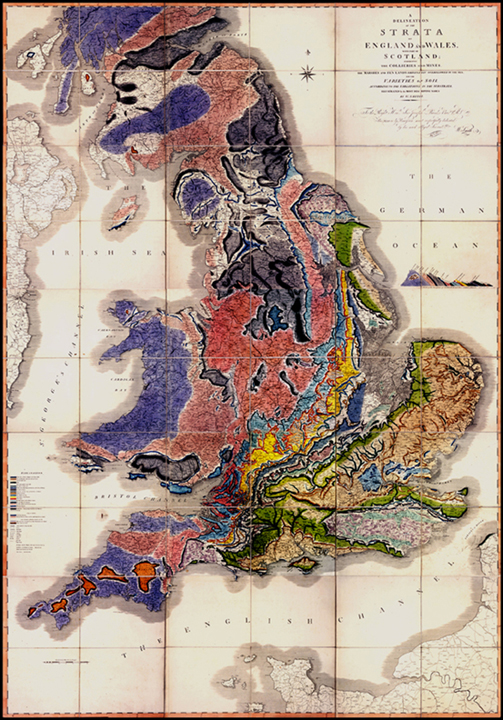
William
Smith's 1815-17 geologic map: This was a very significant piece of work and geologic mapping provides a fundamental basis for constructing the geologic time scale and geologic histories. The different colors represent different rock units defined by a combination of rock type and relative age. He also developed the idea of biostratigraphy - the history of life as preserved in fossils.
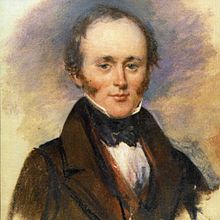 Charles Lyell
and deep geologic time in the Victorian era:
- important works 1820-1850, Principles
of Geology widely read.
- deep geologic time, construction of histories
from detailed geologic field studies, including mapping and measurement
of stratigraphic columns.
- read by and influenced a young Charles Darwin on the voyage of the Beagle.
- Image to right of a young Charles Lyell in 1840. Image source: http://en.wikipedia.org/wiki/Charles_Lyell.
Alfred Wegener,
continental drift and scientific progress in the 1920s. We will
return to this in some detail later.
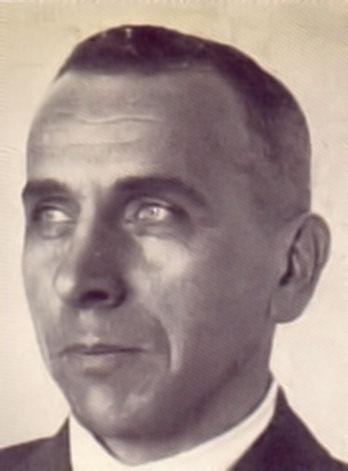
Alfred Wegner photo. Photo source: http://commons.wikimedia.org/wiki/File:Alfred_Wegener.jpg
Plate tectonic revolution of the 1960's:
- seafloor spreading
hypothesis of Vine and Mathews.
- core definition of plate tectonics: The
earth's outer shell is broken up into relatively-rigid curved
plates that move large lateral distances with respect to each
other. This activity determines much of the spatial distribution
of different types of geologic activity and their evolution through
time.
- Plate boundary types: divergent, convergent,
and transcurrent and mixed. Each has its unique character.
- We will discuss plate tectonics in detail in the third part of the course, but introduce aspects throughout the course.
Useful themes in geology
that arise throughout the course.
- How can we understand complex systems?
- Behavior of open and complex natural systems
- the use of cycle concepts and flow diagrams. The hydrologic
cycle is one example of a flow diagram.
- Chaos - what is it?
- Fuzzy logic:
how to deal with imperfect or incomplete knowledge?
- Immensity of deep time.
- Learning to see.
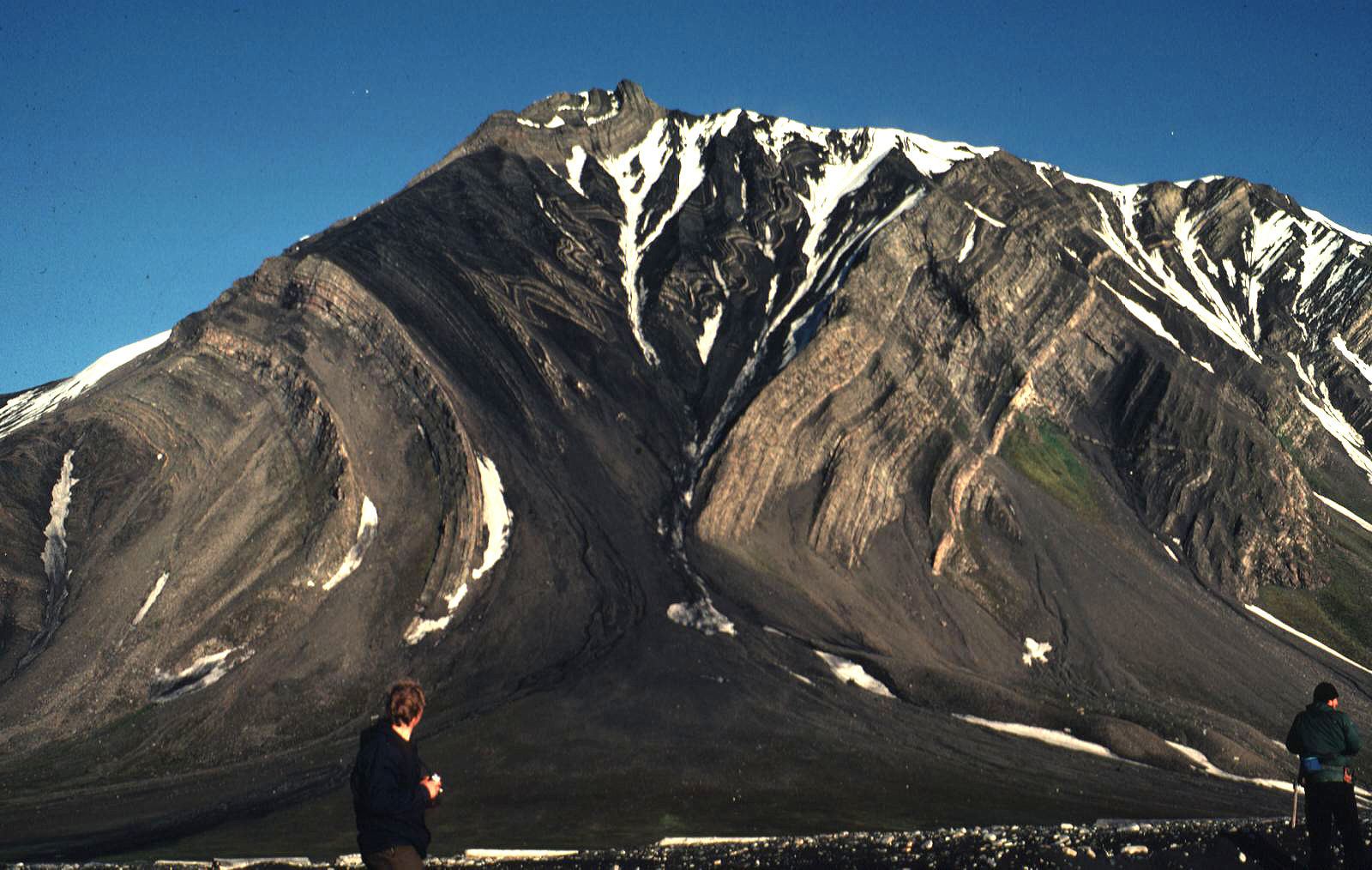
What do you see in this image? By the end of the course you will 'see' much more.
Some thoughts of what can be seen in this image with some introductory geoeducation.
Harmon D. Maher Jr. reserves
copyrights to the materials in this site. Material may be used
for non-profit educational purposes as long as proper attribution
is given. For permission for any other use please contact author.
Thank you.
Return to Physical Geology index
page.
Return to my home
page index.


